
Milk Bread
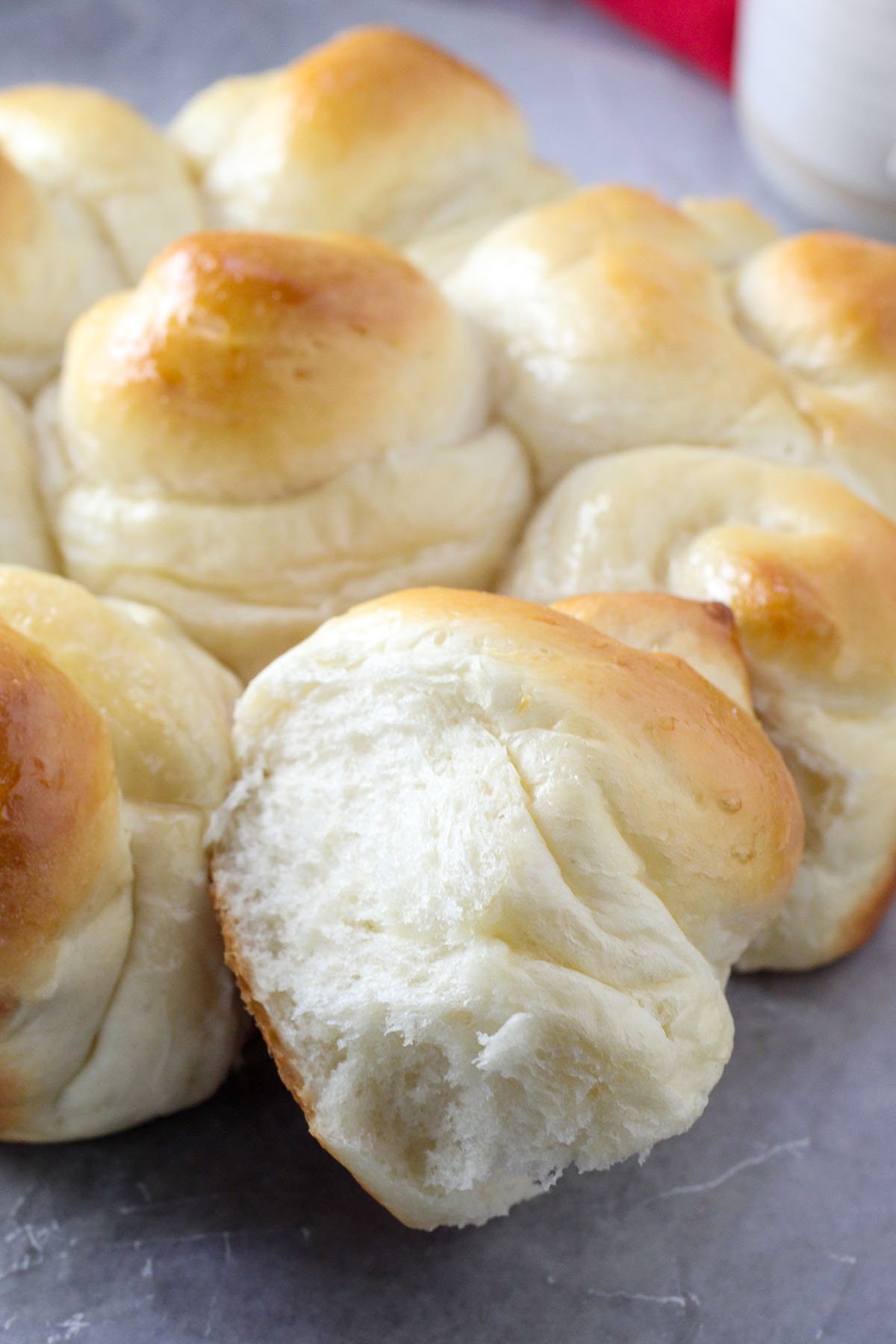
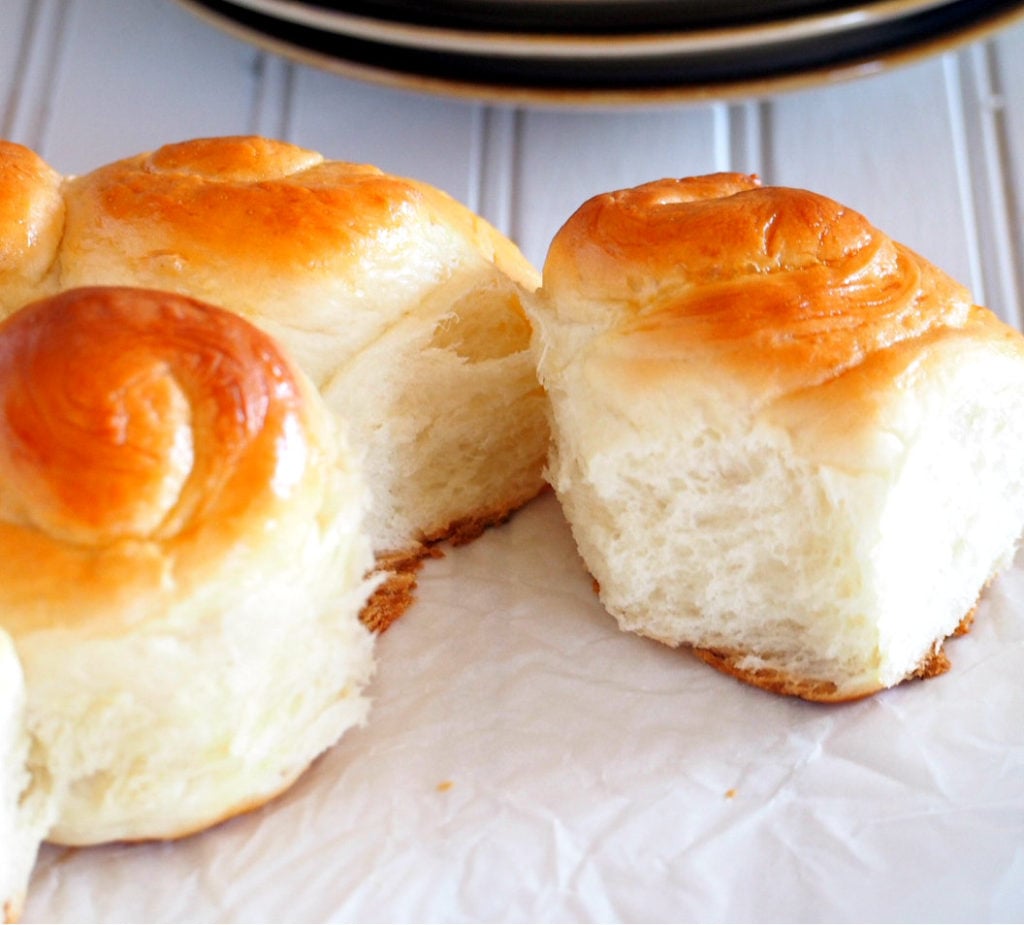
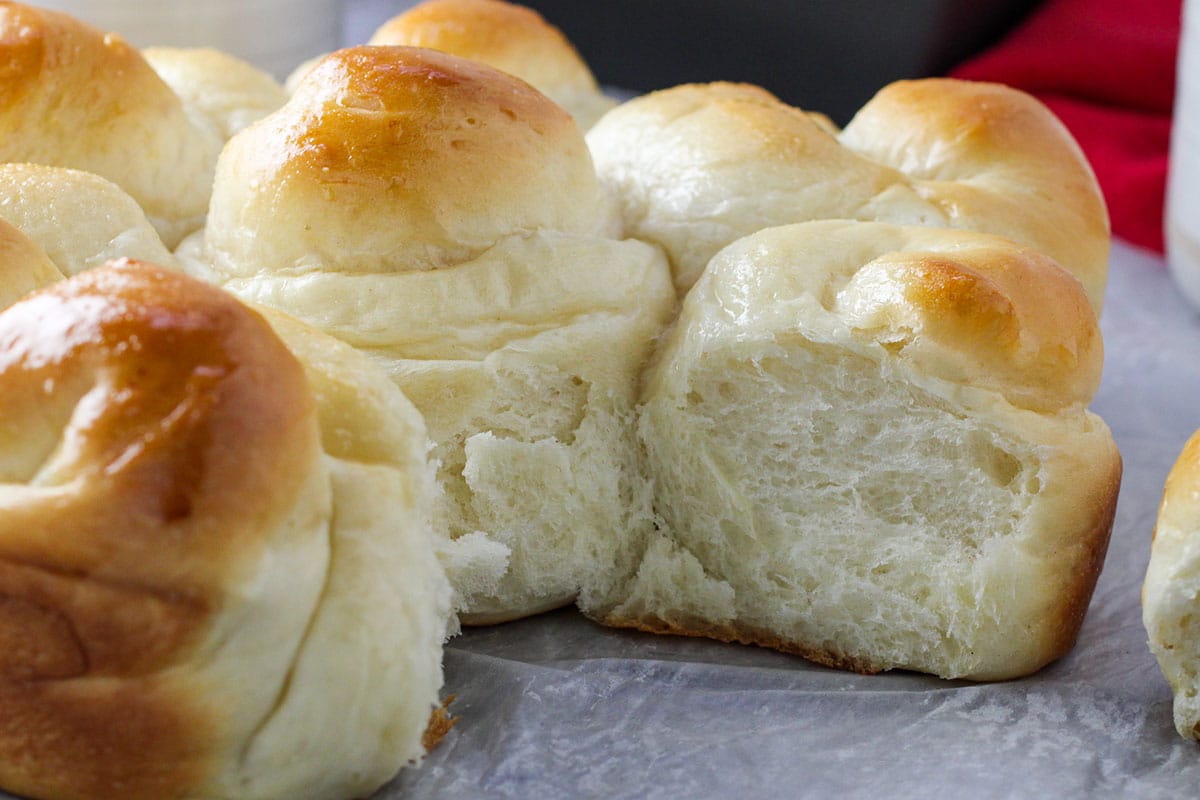
These Milk Bread or also sometimes called as Hokkaido Milk Bread or Japanese Milk Bread are soft and fluffy rolls that are mildly sweet, and are characterized by their super soft crumbs and melt in your mouth texture.
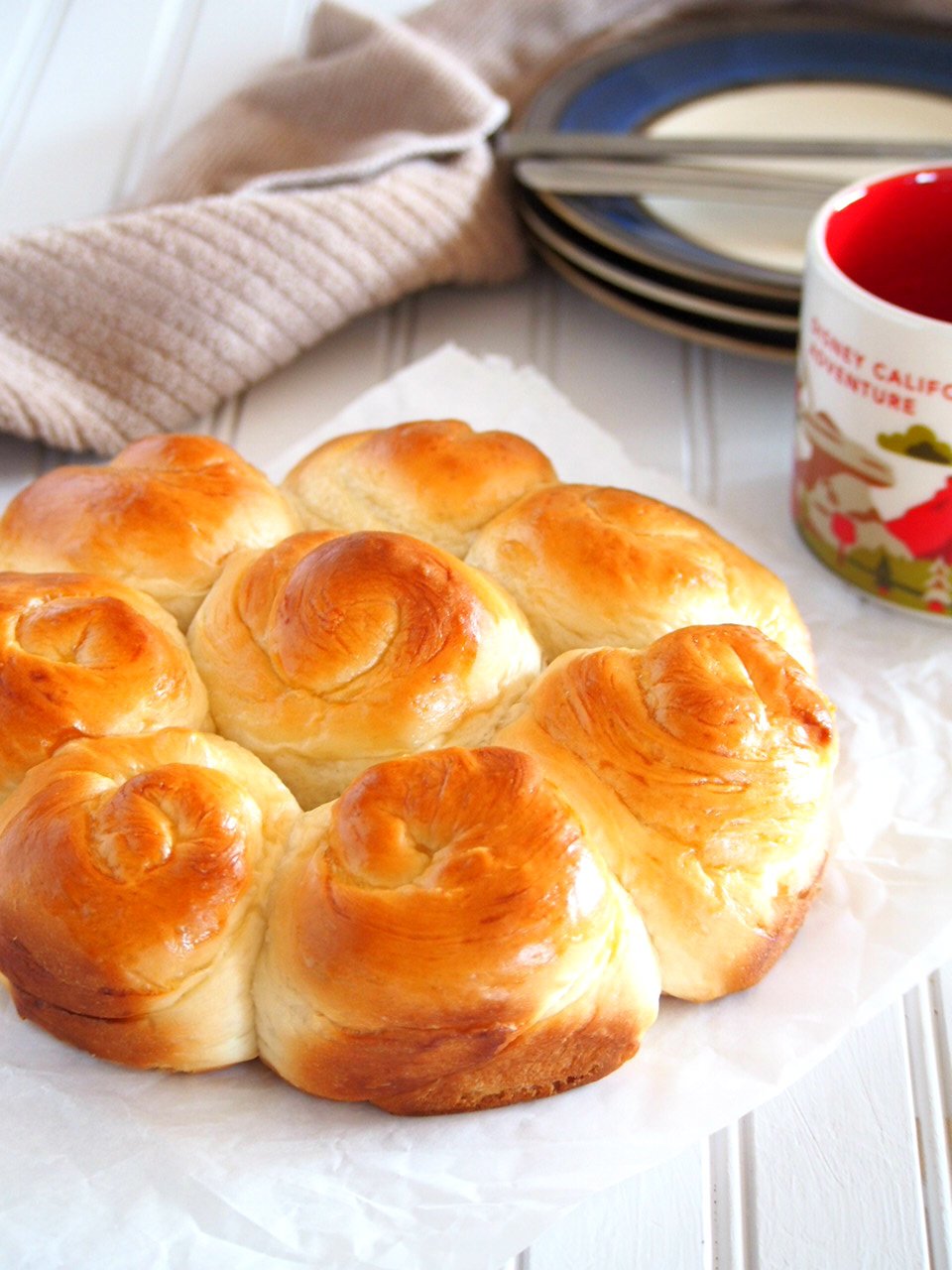
This milk bread had me at its deep golden top. My favorite part of enjoying them is spreading butter lavishly over a soft crust and feeling in my mouth the warm, soft bread being moistened by a smear of softened butter in every bite.
If you are curious as to what is so special about this milk bread, and what makes them different from a regular white bread, then it is this: Milk bread is incredibly soft, flavorful and rich.
Most traditional methods for making milk bread calls for a starter called a tangzhong. It is flour cooked together with water (and milk) to form a soft dough that is mixed with the rest of the ingredients. This recipe is a simpler but foolproof method of making milk bread and does not require the tangzhong.
If you would like to try the Tangzhong method, then check out Japanese Milk Buns.
Pointers for Making Milk Bread
- A stand mixer is employed here and it pretty much does all the job. Kneading using the dough hook takes about 12 minutes, and just like in the brioche recipe, my indication if the dough is ready is if the dough is gathered in the center of the bowl, and is slapping against the sides of the bowl (More about that in the process part later).
- The recipe is enough to make 2 sets of rolls in a round baking pan, and with 8 pieces of rolls in each. You can also make 2 loaves instead. Or like what I did, make one pan of rolls and one loaf.
- They stay soft for days as long as they are stored in covered containers. You can also microwave them for 15-20 seconds, and they will still be as amazing as if they were just out of the oven.
Milk Bread: The Process
Making and Kneading the Dough
- In the bowl of a stand mixer, add the warm water. Sprinkle the yeast and about 1 tsp of the sugar. Let stand until foamy.
- Add the warm milk, warm heavy cream, the egg, the remaining sugar and salt. With the dough hook attached, run the mixer at low speed just to incorporate the ingredients.
- With the mixer still running, add 3 cups of flour, one cup at a time, and beat until the dough gathers into a shaggy mass. Add the remaining cup of flour and continue to beat until incorporated.
- Then slowly build up the speed to medium and mix the dough for about 8-12 minutes, scraping the sides and bottom of the bowl when necessary.
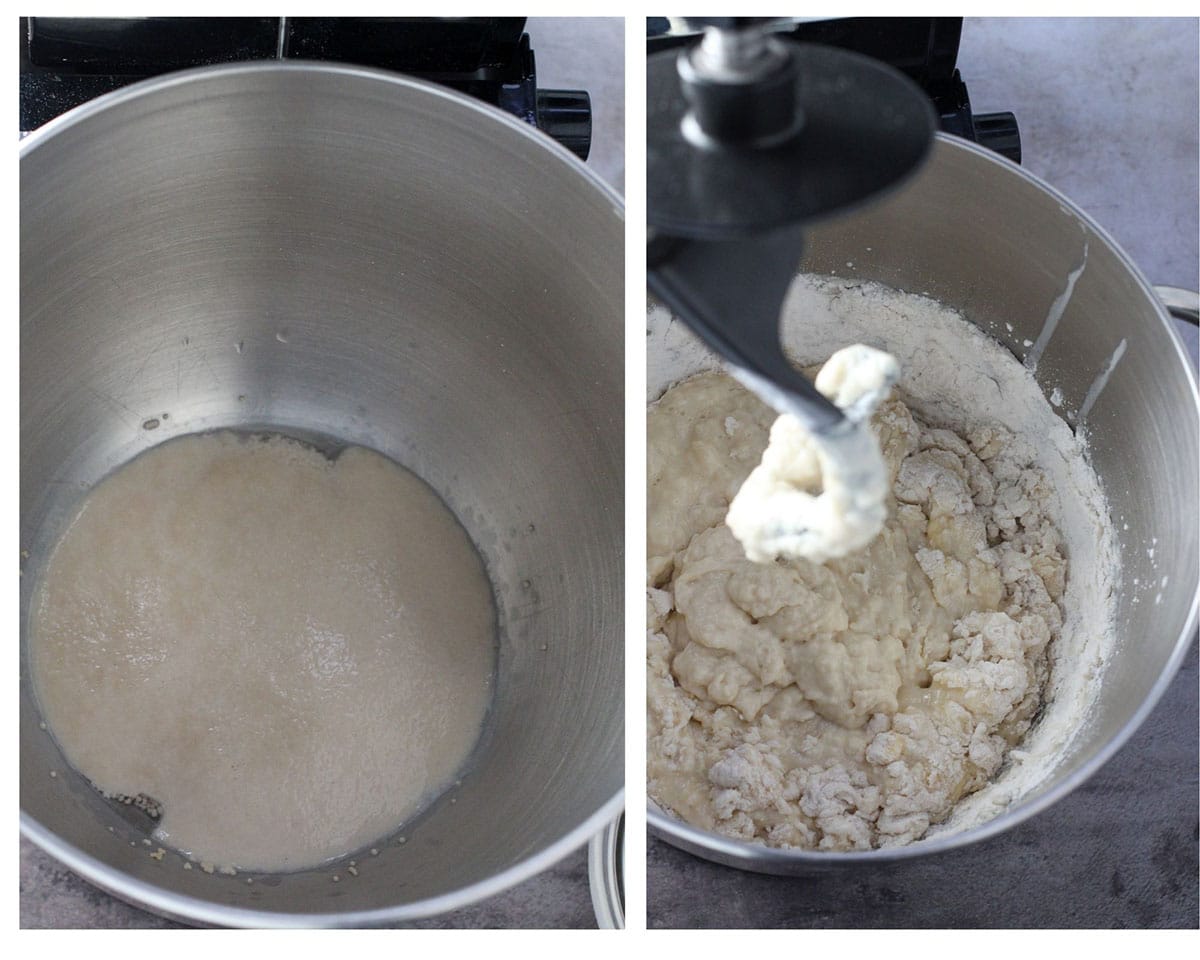
The dough will make the slapping sound during kneading.
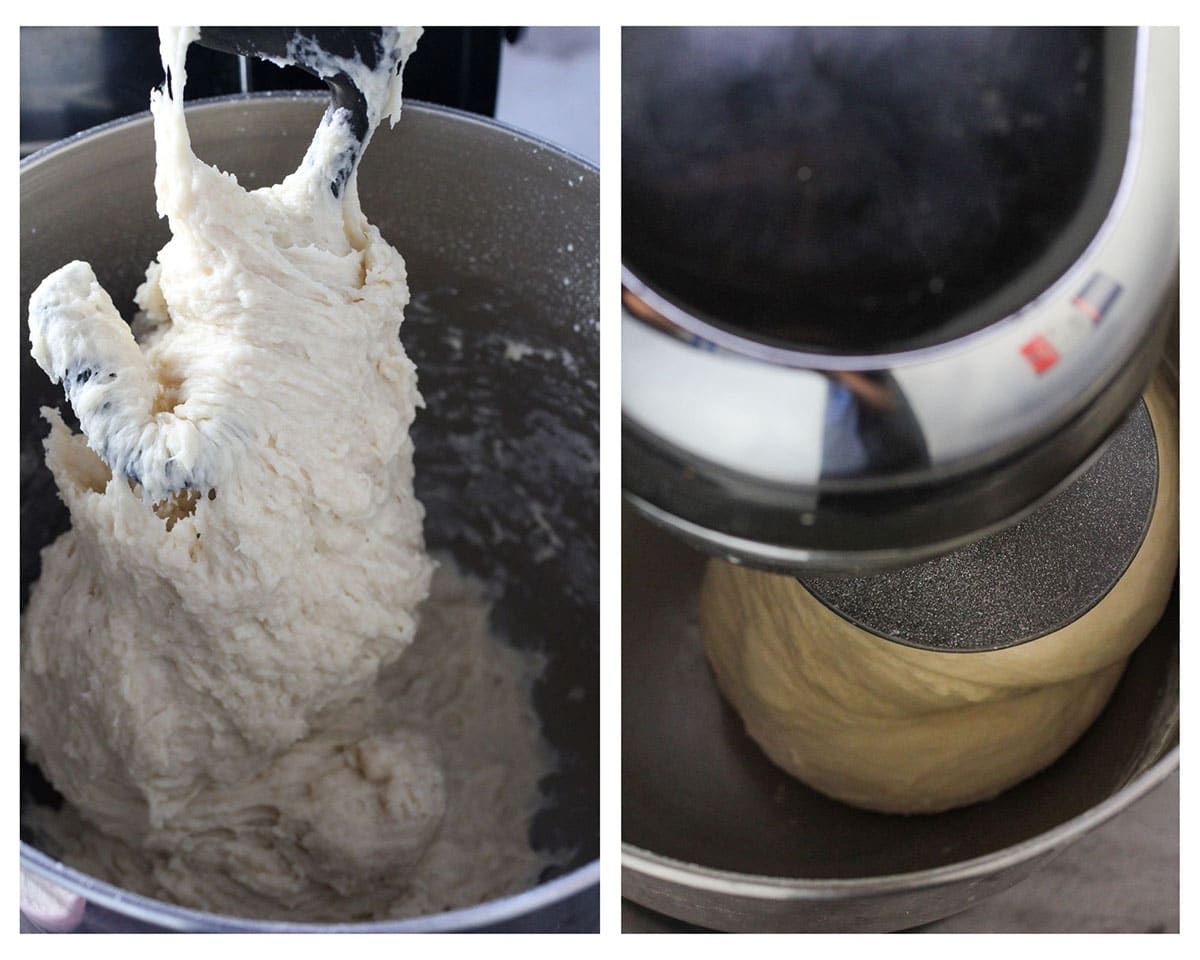
- As the machine continues to run, you should see your dough starting to form in the center, and is clinging to the dough hook. A few minutes more and the dough is beginning to slap the sides of the bowl and making the slapping sound.
- You can sprinkle up to 3-5 tbsp of flour to help the dough release from the bottom of the bowl.
- Keep mixing until the dough is coming together in the center. You should hear the slapping sounds of the dough soon.
- Overall, the kneading should take like 8-12 minutes only. Longer than that, you might risk over kneading your dough. The dough is now ready for proofing.
- Its texture is still a little bit tacky when you poke it with your finger, but it has lost a lot of stickiness at this time.
The First Rise
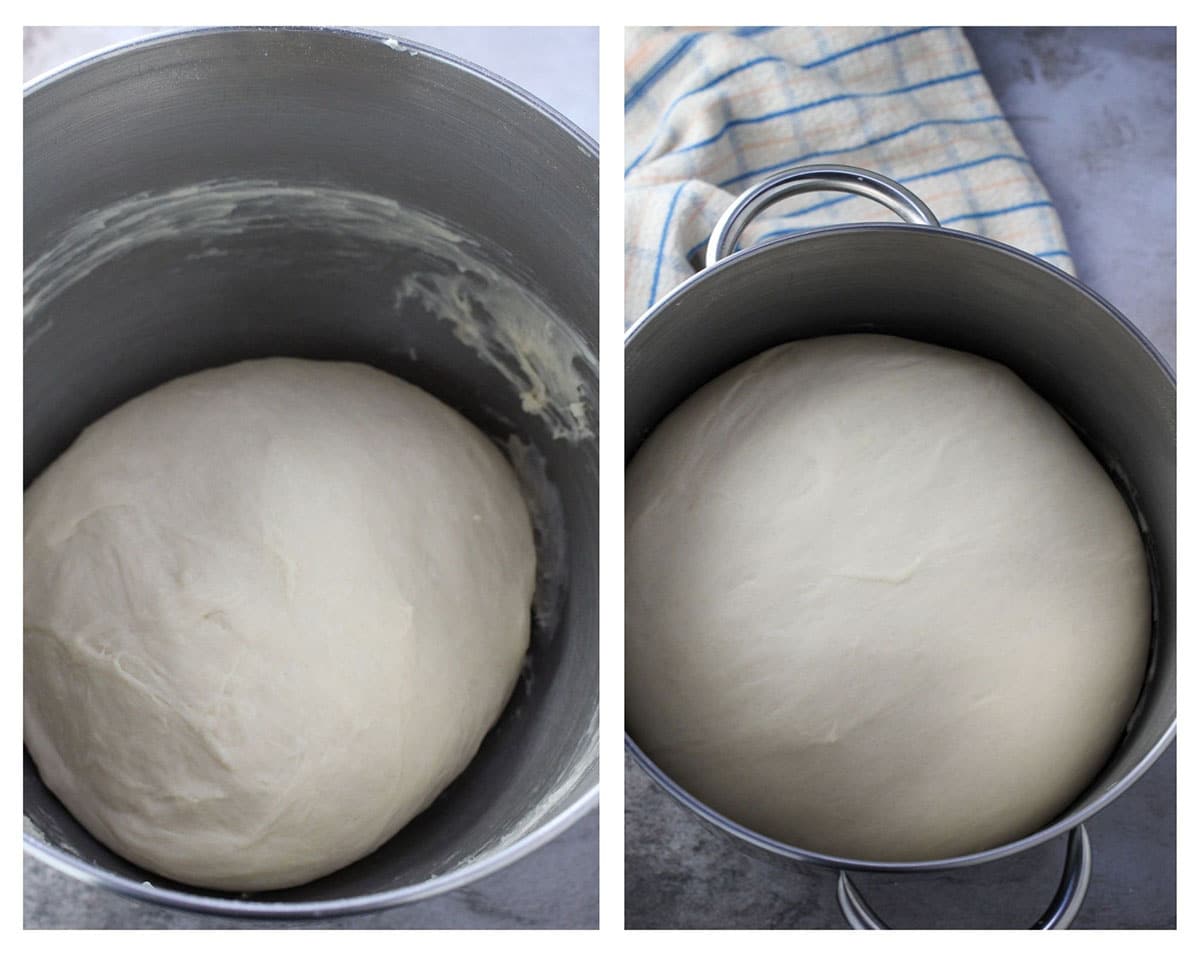
Gather the dough into a ball. Sprinkle a little amount of flour into the sides and base of the bowl and place the dough for proofing. (Or set the ball of dough in another bowl, if you prefer.)
Cover the bowl with a kitchen towel and set this aside in a warm place for about 1 to 1 and 1/2 hours. The dough should double in size. After the first rise, divide the dough into two equal portions.
Shaping the Dough (3 ways)
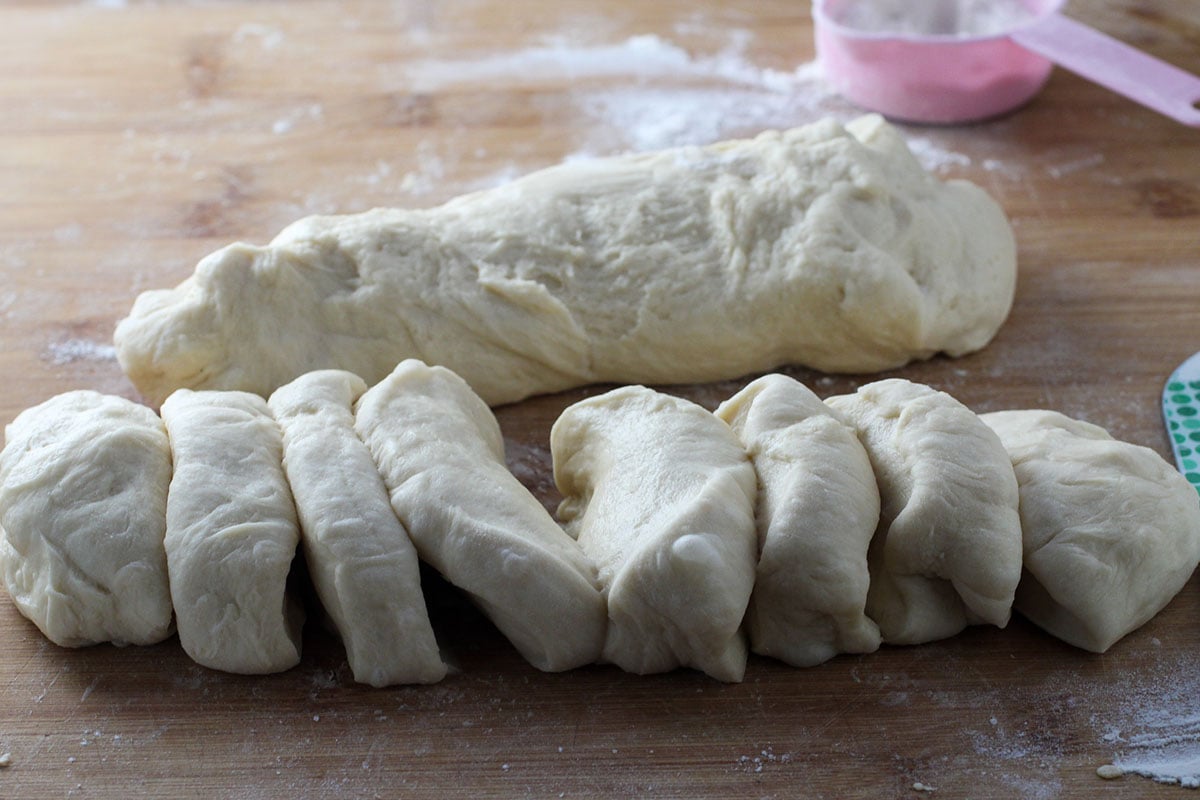
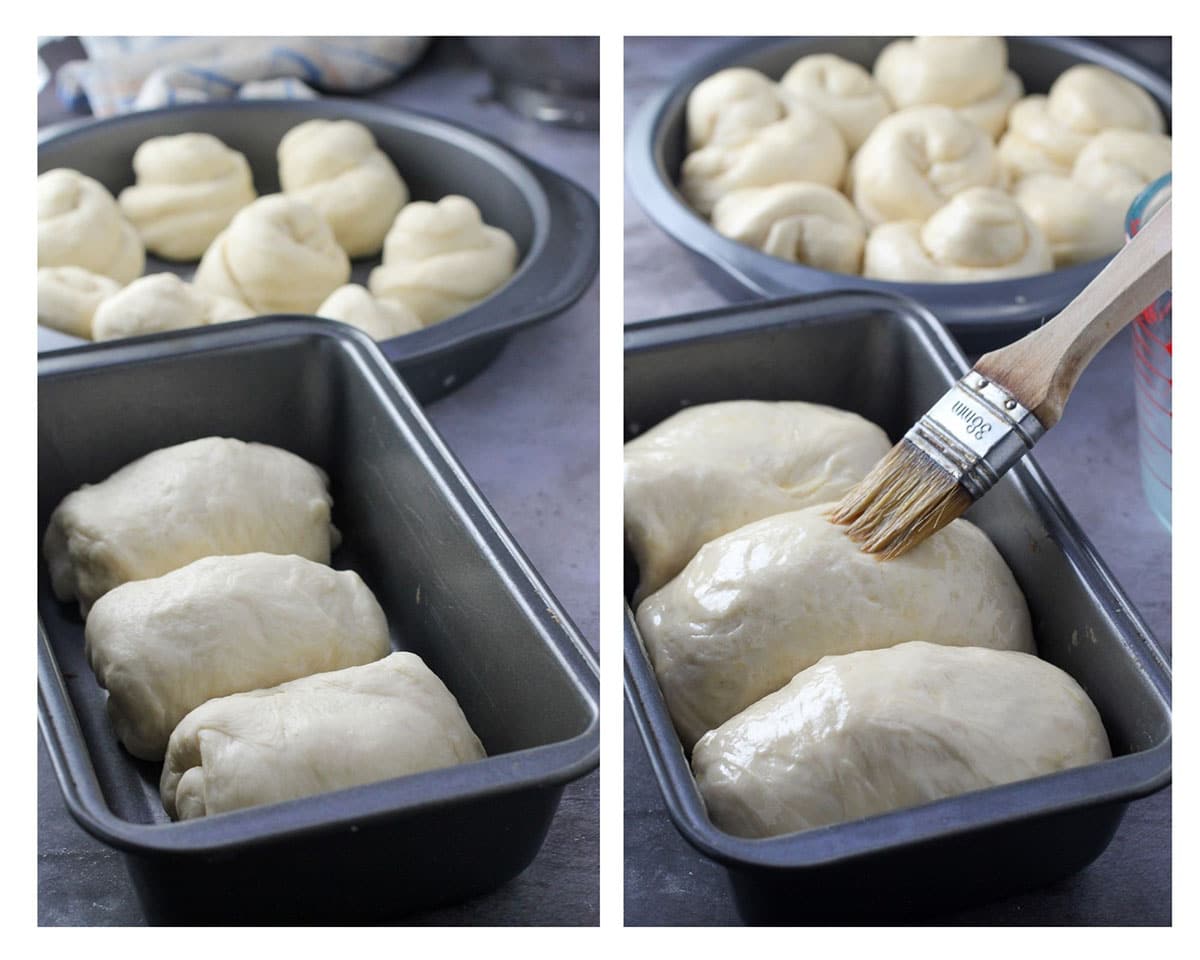
- 16 pieces of milk buns. Divide each portion into 8 equal portions, for a total of 16. Roll each portion into a log of about 8-10 inches long. Roll the log into a coil, tucking the ends under the roll. Place each roll in the pan, giving them about an inch of space in between. Each 9 inch round pan can hold 8 pieces of rolls each.
- 2 large milk loaves. Divide each portion into three portions for a total of 6. With your palms or a rolling pin, roll each portion into a rough rectangle that is about 1/4 inch thick. Roll each rectangle beginning on the short edge to form a cylinder. Repeat with the rest of the portions. Using two greased 9×5 inches loaf pan, arrange the cylinders next to each other, with three cylinders in each pan.
- Combination. Make buns with one half of the dough, then make a loaf with the other half. This is what I do!
The Second Rise
Let this assembled dough rise for an hour. Cover them loosely with plastic wrap and set them aside. Once the dough has risen, preheat the oven to 350 F.
Make the egg wash by beating one egg with 1 tablespoon of milk. Brush the surface of the rolls with the egg wash.
Baking the Rolls
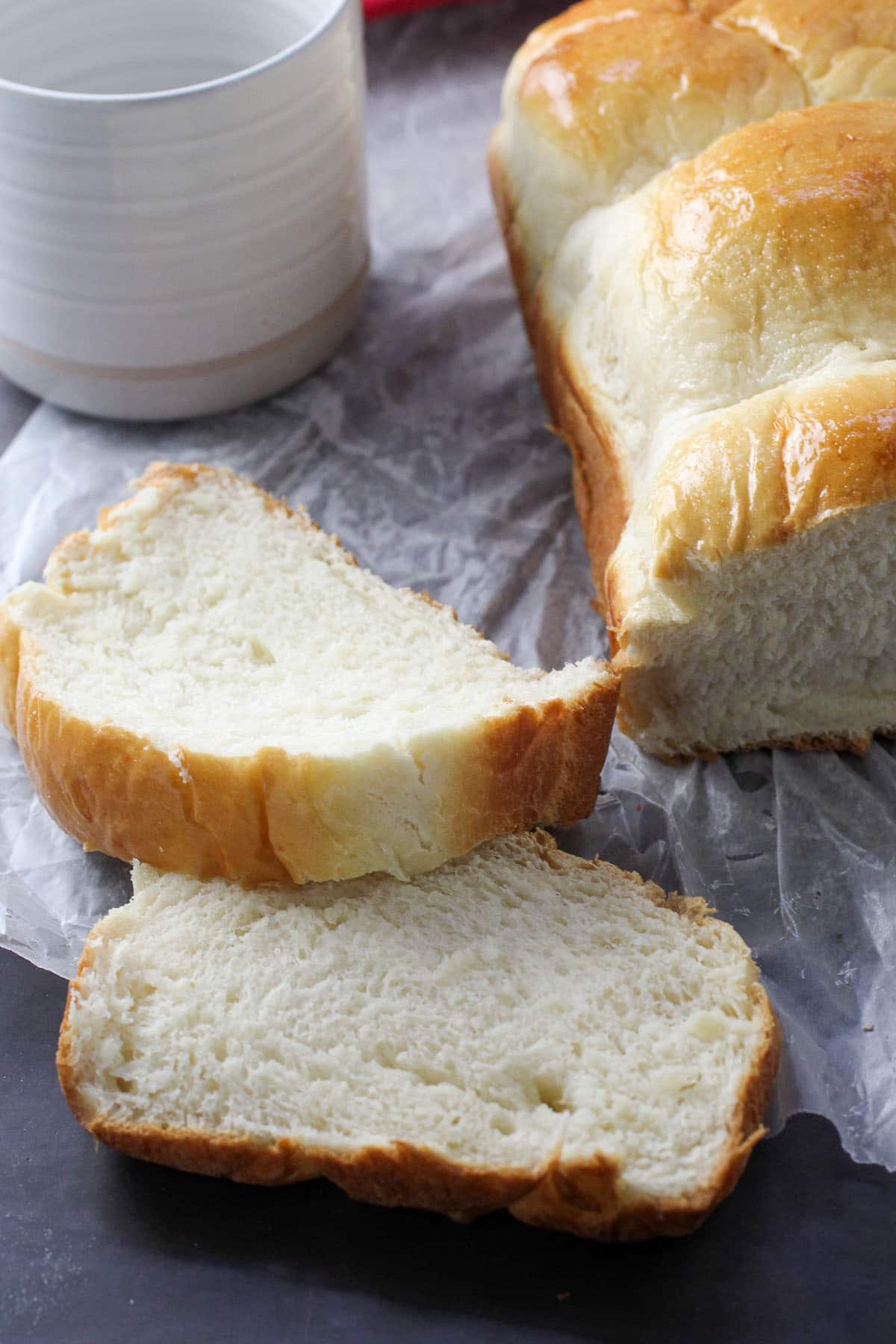
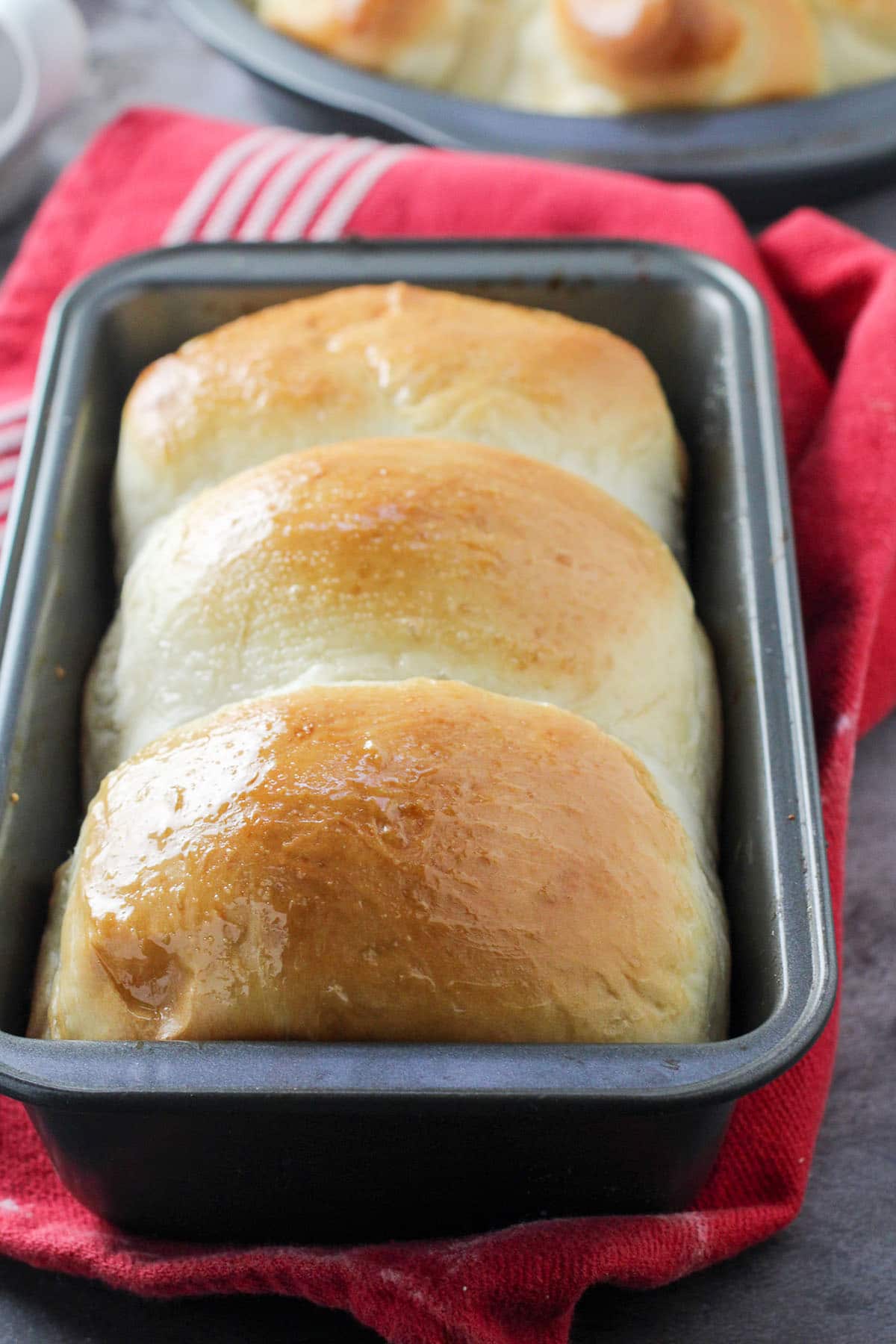
Bake the rolls for 23-25 minutes. The top should be deeply golden and a thermometer should read 200 F. Do not over bake them for they will dry out fast.
Then, enjoy the fruit of your not-so-hard labor. Your bread is now ready for glazing, for slathering with spread, or simply pick one out right there and feel the fluffiness of each bite.
Frequently Asked Questions
I would not recommend cutting the recipe in half. What you can do is to make the dough, then freeze half of it for future use.
After the first rise, gently deflate the dough and wrap it well in plastic film. Then, wrap it with foil. You can freeze the dough for up to 2 weeks.
To use frozen dough, thaw it in the fridge. Then shape the dough as instructed in the recipe. Allow it to do the second rise as usual, then bake.
I am essentially trying to yield the same type of bread with both recipes-soft, fluffy and slightly sweet. The difference between the two is that Japanese Milk Buns uses tangzhong in the dough, while Milk bread does not.
Simple glaze: Mix 3 teaspoons of sugar with 2 teaspoons hot water. Stir mixture until sugar is dissolved. Brush over the bread surface.
Enjoy!
If you are looking for more Asian Bakery favorites, try these:
Milk Bread
Ingredients
- 1 tbsp active dry yeast
- 1/4 cup warm water 105-115 F
- 2/3 cup warm milk
- 2/3 cup heavy cream
- 1 large egg
- 1/3 cup of sugar
- 1 ½ tsp salt
- 4 cups all-purpose flour plus up to 3 tbsp. extra
For the Egg Wash
- 1 large egg
- 1 tbsp milk
For the Sweet Glaze
- 2 tsp water
- 3 tsp sugar
Instructions
- In the bowl of a stand mixer, add the warm water. Sprinkle the yeast and about 1 tsp of the sugar. Let stand until foamy. Add the warm milk, warm heavy cream, the egg, the remaining sugar and salt. With the dough hook attached, run the mixer at low speed just to incorporate the ingredients.
- Add 3 cups of flour, one cup at a time, and beat on low speed after each addition. The dough will start to gather into a shaggy mass. Add the remaining cup of flour and continue to beat until incorporated. Then slowly build up the speed to medium and mix the dough for about 8-12 minutes, scraping the sides and bottom of the bowl when necessary.
- You will see the dough starting to gather into the center and attaching itself into the dough hook. Sprinkle a little amount of flour (about half a teaspoon at a time) into the bowl and continue mixing. This should help the dough to release from the bottom of the bowl. You can add up to two tablespoons of flour and you should soon see the dough starting to gather in the center of the bowl. As you approach the 12 minutes mark, you should hear the dough slapping the sides of the bowl as it clings to the dough hook. This is a good sign that your dough is ready for proofing.
- Gather the dough into a ball, sprinkle a little bit of flour into a bowl, and place the ball of dough inside it. Cover the bowl with a kitchen towel and set it on a warm place for one hour to one hour and a half, until the size of the dough is doubled. Meanwhile, Grease two 9 inch round cake pans.
- Divide the dough into 16 equal portions. I usually cut the dough in half, then cut each portion in half again, and so on until I yield 16 equal pieces. Roll each portion into a log of about 8-10 inches in size, then twist each log into a coil. Tuck the ends underneath. Place each assembled dough inside the round pans, giving about an inch of space between each roll. Each 9 inch round cake pan should have 8 rolls each. Cover the rolls loosely with plastic wrap and let rise again until double in size, about an hour or so.
- Alternatively, you can make two loaves by dividing the dough into 2 portions, then divide each portion into 3 portions for a total of six. Roll each portion into a rough rectangle, then roll it into a cylinder starting on the short edge. Arrange 3 cylinders of dough in each pan. (See photos in the post)
- Preheat oven to 350 F. Make the egg wash by lightly beating one egg with 1 tablespoon of milk. Brush the surface of the rolls with the egg wash without letting the fluid drip to the sides. Bake in a 350 F oven for 23-25 minutes or until rolls are deeply golden on top. A thermometer should read 200 F. Once it reaches that mark, the bread is done. For loaves, bake it for 3-5 minutes more. To make the glaze, mix three teaspoons of sugar with two teaspoons hot water, stir it until the sugar is dissolved, and brush over the bread.
Notes
- Bread can be stored at room temperature in a covered container for up to three days. You can heat it in the microwave for 12-15 seconds, if desired.
- The dough will literally make some slapping sounds during kneading, and this is your sign that the dough is ready.
- Do not add too much of extra flour to the dough, or you will end up with a dry dough. You want it nice, smooth and elastic. A little tackiness is perfect.
- You can either shape the dough into buns or into 2 loaves as instructed in the recipe.
Nutrition
Want more bread? Check these out:
- Buttery Sugar Buns
- Garlic Herb Bread
- Austrian Buchtel ( Sweet Mini Buns)
- Mini Cinnamon Rolls with Coffee Icing
- Ham and Cheese Rolls
- Chocolate Hazelnut Rolls
- Japanese Milk Buns
- Coconut Buns with Milky Sweet Filling
This recipe is originally published in February 2018. It is now updated with new photos and an improved recipe.
Post contains an affiliate link. Please see the Disclosure page to learn more.




Hi. Can i make half of the recipe. I mean can i cut the recipe in half?
Hi Mimo. I have not tried cutting the recipe in half because the measurements will be tricky. I always do the full recipe. The buns will be gone quick, anyways 🙂
Can it be made in a Dutch oven ?
Hi Amy! Unfortunately, I have not tried it using a dutch oven. Sorry! I hope you still try to make this.
Hi all. I could not not to try these magnificent great looking “eat me” buns. And they came out of the oven a few minutes ago….every one took a bite and u could see how the look on their faces changed….as in a dream…and I think…enough said!!!.
Don’t miss it…make it.
Hello, Hilik! Thank you. I am so glad you enjoyed them.
Hi. Made it and it was amazing. Thank you for sharing this recipe xx
Thank you so much, Badriya! It means a lot to me!
Stunning, they look so golden and perfect! I can just imagine how divine they make your house smell while they are baking.
Thanks, Ruby! The aroma is just so wonderful! How are you?
Thank you for answering my questions! I have made these twice and are my favorite for giving someone because they look so pretty and are so fluffy. I sub a honey butter glaze over sugar. I have a kitchen aide and it does all the work for me. The highest speed I put it on is 4 but I try to keep it on 2.
Hi Chelsea! Thank you for your feedback. I am sO glad that you enjoyed the recipe. This is my fave too!
I have a Kitchen Aide stand mixer and it says not to go over 6 min I believe, so just wanting to avoid over kneading. Previously, I start hearing the slapping sound after about 2 minutes, but your your recipe calls for about 15 minutes of kneading. Thanks for your help!
Hi Chelsea! If the dough is smooth and can stretch thinly, then it is good. I don’t have a Kitchen Aide, and maybe the mixing speed differs from mine. ( I use Oster) The slapping sound is a good indication that the dough is ready. Just look for other signs like the smoothness and stretchiness. good luck and thank you so much!
Also, for medium speed, the dial is somewhere between 4-6.
So excited, amateur bread baker here. When you say to put the mixer on medium speed, do you mean 5? My handbook for mixer says “kneading is at level 2”. Also, do you think half and half would be ok to substitute?
Hello Chelsea, It will be best to use level 2 so to follow the mixer guidelines for the particular brand you use. 🙂 I have not tried using half and half in place of the heavy cream, but I am thinking that it should be fine 🙂
Please keep me posted. 🙂
i use fresh yeast should i just acticate with the warm milk and a bit of sugar or mix all toghether
Hi Dorothy! I have not made this with fresh yeast so I cannot guarantee the results. However, to activate fresh yeast, you need the warm milk and just a bit of the sugar.
Can this be made as a loaf instead of rolls?
Hi Kathleen, I personally haven’t tried making this into a loaf, but I am seeing It is totally okay to do so 🙂 Let me know how it goes:)
Hi!! This looks amazing!! I was wondering if I can half the recipe???
Hi Josie! Thank you! Yes you can half the recipe if you prefer. Happy baking! I hope you enjoy these!
These rolls look irresistible! The tops are so glossy and shiny! Love them. I never thought of adding milk to the egg wash – I’m definitely going to use this idea! And this bread is on my to bake list (actually, it’s been on it for a little while since I first saw the recipe on pinterest last month)
They are amazing, Julia! 🙂 You will love them!
I can see I will have to make this recipe. It looks fabulous with that golden glow from the egg wash. Making your own bread just fills your house with such great aromas.
Thanks, Mark! You will love this!
Have you ever made these with gluten free flour?
Hi Kim! Unfortunately,I have not tried them with gluten free flour so I can’t be sure of the results. Please let me know if I can help in any way, and I would also be more than happy to know the result if you try it with GF flour. Thanks!
This may sound like a stupid question but what s “heavy cream” – do u mean whipping cream? or half-and-half or something entirely different?? Many tks.
Hi Helen! I am sorry, I should have been more specific. It is whipping cream. I used 35% fat. Happy Baking! Thanks!
Many tks for getting back to me. You have wonderful recipes.
Have a great day!
No problem and thank you too!
Hi there, this looks amazing and would love to try it. Can I use instant yeast? I live in South Africa and don’t think active yeast is available. Also, no thermometer. How will I know when 115deg is reached after warming the milk. I have a meat thermometer? Would that help!
Hello there, Trudy! Thank you for your question. The meat thermometer would work fine. Generally, the rule is for the milk to not be lukewarm or hot but somewhere in the middle. A thermometer will work just to be sure of the temperature. But then, since you are using instant yeast, you can add the yeast straight to the dough and you don’t need to warm the milk. Just follow the recipe exactly, just omit the warming of the milk part. Active dry yeasts work best when dissolved in warm liquid while instant yeasts can actually be added straight to the dough. Hope that helps and let me know how they turn out!
I made this yesterday and it was absolutely fabulous – and enjoyed and loved by my neighbours too! I also live in South Africa and used instand yeast. Thank you for this recipe – will be making it again and again!!
I am so happy you loved this Thea!
I do not have one of those fancy mixers can you still make it without out them
Hi Nina,
Yes, you can still knead it by hand. You just have to look for the signs of an adequately kneaded dough. It should be smooth, shiny and can stretch thinly.
Good luck and keep me posted!