
Nutella Danish Pastry
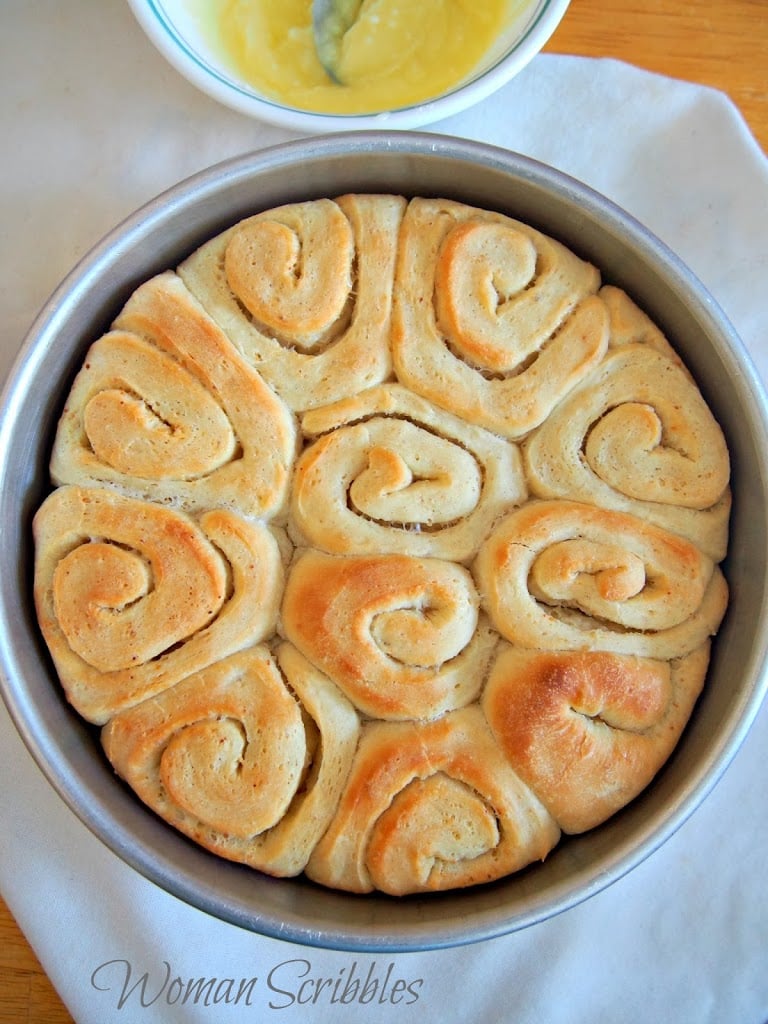
Flaky and buttery Danish pastries filled with creamy Nutella, You can make this Nutella Danish Pastry at home following this simple recipe guide.

Okay, last time we made Danish Pastry Braid, and now the Danish dough is making a comeback and we are making Nutella Danish Pastry.
So we are basically using the same pastry dough but this time we are shaping them into round twisty pastries that are filled with Nutella!

Again, yes I know, making danish pastry can be intimidating at first, but this pastry recipe is nothing more than a series of rolling out the dough, then folding. If you follow along, and I make sure I break it down simply for you, you are going to be making this with success!

Let’s Make Nutella Danish Pastry
The Pastry Dough
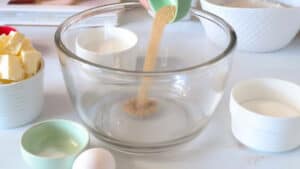
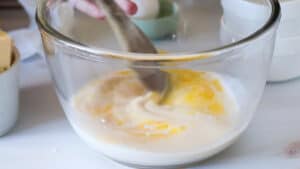
Add warm water in a mixing bowl. Sprinkle the yeast in there and let the mixture sit for 5-10 minutes, or until foamy. Then stir in the milk, egg, sugar and salt. Now set this mixture aside.

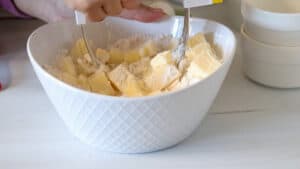
In another large mixing bowl, add the cubed butter and flour. Use a pastry cutter to cut the butter into the flour, until you get a nice crumbly mixture with bits of butter here and there.

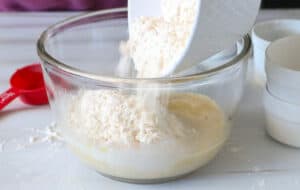
Pour this crumb mixture into the yeast mixture in the other bowl. Use a wooden spoon to combine. Do not overmix. You want the butter to remain in bits here. It is these bits in the layering that will create a flaky pastry. Mix this, just until combined. Cover the top of the bowl with plastic film, then refrigerate this overnight.

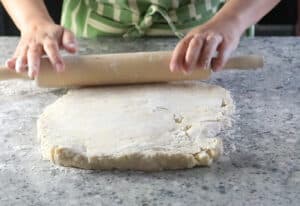
The next day, take out the bowl of dough. Generously dust a clean surface with flour. This dough will be sticky so dust generously. Turn the dough over and pat into a rough square (first photo on the right below). Then use a rolling pin to roll it out into a 15 inch square.
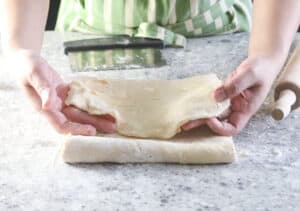
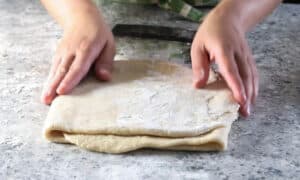
Fold the square in thirds. That is, fold the upper third down, then fold the lower third over to cover the first fold (second photo, upper right below). It is like how you fold a letter before putting in an envelope. Use a pastry scraper here to help you lift the edges of the dough during folding.

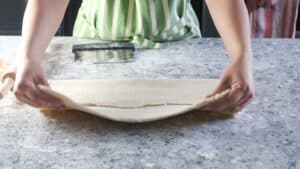
Rotate the dough so that the short edge is closest to you. Fold this again in thirds. If at anytime the dough starts to warm up and soften, pop it in the fridge or freezer to chill for 5-10 minutes.
Using a rolling pin, roll the dough into a 15 inch square again. Make sure to dust your surface well to prevent sticking. Fold this in thirds. Then rotate so short edge is close to you.

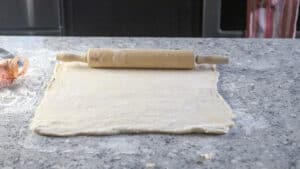
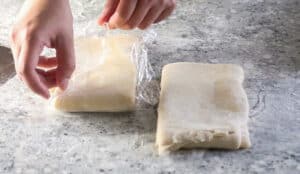
Roll the dough out into a rectangle that measures 10 x 22 inches. Again, fold this large rectangle in thirds. Cut the dough in half. Store one portion in the fridge while you work with the other one.

On a floured surface, roll the dough into a 18 x 8 inch rectangle.
Using a pizza cutter, cut 5 small equal rectangles along the long side of the dough. Repeat the process with the other half of the dough, making 10 rectangles in total.

Take one of the portion and spread about 1 ½ tbsp. of Nutella along the center. Using a sharp knife or pizza cutter, cut 1-inch thick slanting lines on both sides of the rectangle.
To make braids, alternately fold one strip of dough over to the center, covering the filling. Pinch the ends to seal. Next, form a circle with this braid. Pull both ends together to meet in a circle. Press the ends, one over the other, to seal. Brush the tops with egg wash.

Preheat the oven to 375 F. Let the braided pastry rest for 30 minutes. It will not double, but the dough will soften and puff a little. Bake the Danish braid for 15 minutes, or until the tops are lightly golden and crisp.

Summary
So to summarize the rolling and folding, here is an overview:
- First we roll into a square (15 inches), then fold in thirds.
- Roll it out to a rectangle (10x 22 inches), then fold in thirds.
- Roll it out to a square (15 inches), then fold in thirds.
- Roll it out to a rectangle (10×22 inches), fold in thirds.
- Cut the dough into 2 portions then begin the assembly of the pastries.
Also Try

Nutella Danish Pastry
Equipment
- 1 Pastry Cutter/ Pastry Blender
Ingredients
- ¼ cup (62.5 g) warm water 105-115 ℉
- 2 ¼ tsp (7.1 g) active dry yeast
- ½ cup (128.92 g) milk warm
- 1 large (50 g) egg
- ⅓ cup (70.45 g) sugar
- 1 tsp (6.09 g) salt
- 2 ¾ cups (363.24 g) all-purpose flour
- 8 oz. (226.8 g) butter cubed and chilled
For the Filling
- 8 oz. cream cheese softened
For the Egg Wash
- 1 large (50 g) egg
- 1 tbsp (15.22 g) milk
Finishing
- powdered sugar for sprinkling on top of baked pastries
Instructions
- Add the warm water to a large mixing bowl. Sprinkle the yeast over it and let the mixture sit for a few minutes until foamy or thick.

- Add the milk, egg, sugar and salt. Use a wooden spoon to combine.
- In a large bowl add the flour, then the cubed butter. Using a pastry blender, cut the butter into the flour until the mixture looks like coarse crumbs, with bits of butter here and there. It is these bits that will give us the flaky pastry result, so make sure to not overwork here.
- Pour this crumb mixture into the yeast mixture in the other bowl. Use a wooden spoon to combine, Do not overmix, Again, we want the butter to remain in bits here. Overmixing can yield a tough, non-flaky pastry. Cover the bowl with a plastic wrap and chill it in the fridge overnight.

- The next day, take out the bowl of dough. Generously dust a clean surface with flour. Turn the dough over and pat into a rough square.

- Using a rolling pin, roll the dough into a 15 inch square. Make sure to dust your surface well to prevent sticking.
- Fold the dough in thirds to form a rough rectangle.
- Rotate the dough so that the short edge is closest to you. If needed, use a pastry scraper to lift the edges of the dough if they are sticking. Roll the dough out into a rectangle that measures 10 x 22 inches.

- Again, fold this in thirds. If at anytime the dough starts to warm up and soften, pop it in the fridge to or freezer to chill for 5-10 minutes.

- Next, Roll the dough out again into a 15 inch square.
- Fold this in thirds.
- Roll the dough to 10 x 22 inches rectangle once again, then fold this in thirds.
- Cut the dough in half. Store one portion in the fridge while you work with the other one.

- On a floured surface, roll the dough into a 18 x 8 inch rectangle. Transfer the rectangle over a large parchment paper. On the center third along the length of the rectangle, spread half of the cream cheese filling. Spoon half of the fruit jam on top of the cream cheese.

- Using a pizza cutter, cut 5 small equal rectangles along the long side of the dough. Repeat the process with the other half of the dough, making 10 rectangles in total.

- Take one on of the portion and spread about 1 ½ tbsp. of Nutella along the center.

- Using a sharp knife or pizza cutter, cut 1-inch thick slanting lines on both sides of the rectangle.
- To make braids, alternately fold one strip of dough over to the center, covering the filling. Pinch the ends to seal.
- Next, form a circle with this braid. Pull both ends together to meet in a circle. Press the ends one over the other, to seal. Brush the tops with egg wash.(To make the egg wash, beat one tbsp of milk with one egg).
- Preheat the oven to 375 F. Let the braided pastry rest for 30 minutes. It will not double, but the dough will soften and puff a little. Bake the Danish braid for 15 minutes, or until the tops are lightly golden and crisp.




Notes
- Dough Stickiness. Generously flour your working surface to prevent the dough from sticking. If dough sticks during rolling or folding, use a pastry scraper to lift the dough.
- Do not let the dough warm up. If at anytime the dough warms up and softens too much, pop it in the fridge for 15 minutes or in the freezer for 5-8 minutes.
- Leftovers. Store leftover pastry at room temperature for up to 2 days, covered well in a container. Refrigerate the pastry to store it for up to a week.
- Freezing the Danish Pastry Dough. You can freeze the Danish pastry for up to a month. Wrap it well in plastic film, then in foil.



simple pastry at home!