
Maple Pecan Danish Pastry
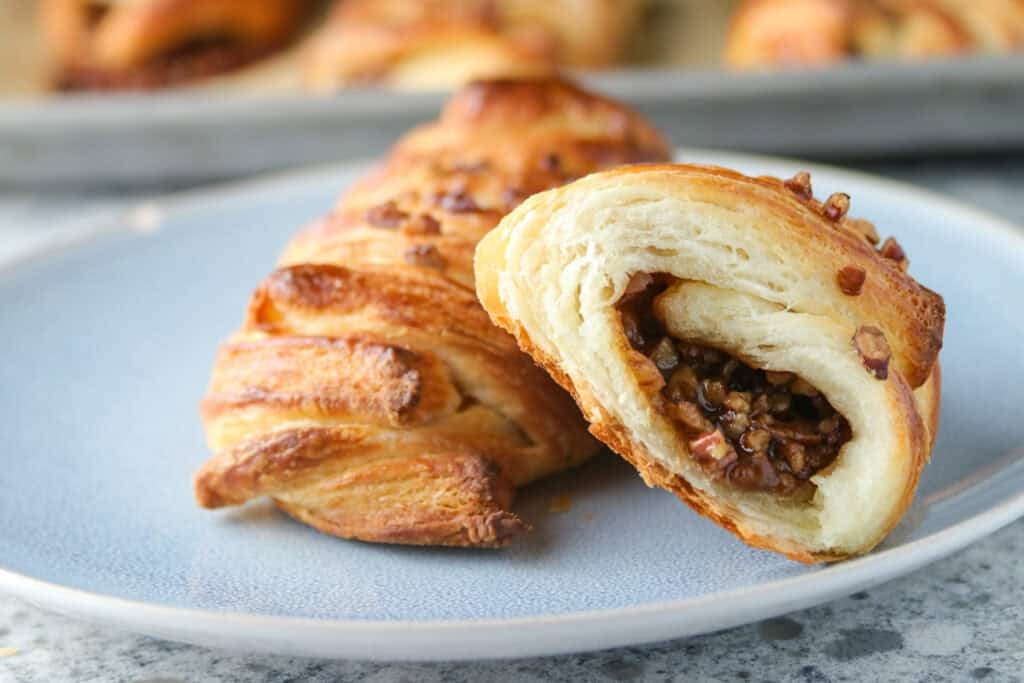
Maple Pecan Danish Pastry combines delicious textures from sweetened pecans and richness from the buttery layers of pastry. This is a delicious homemade pastry made you can totally master at home!
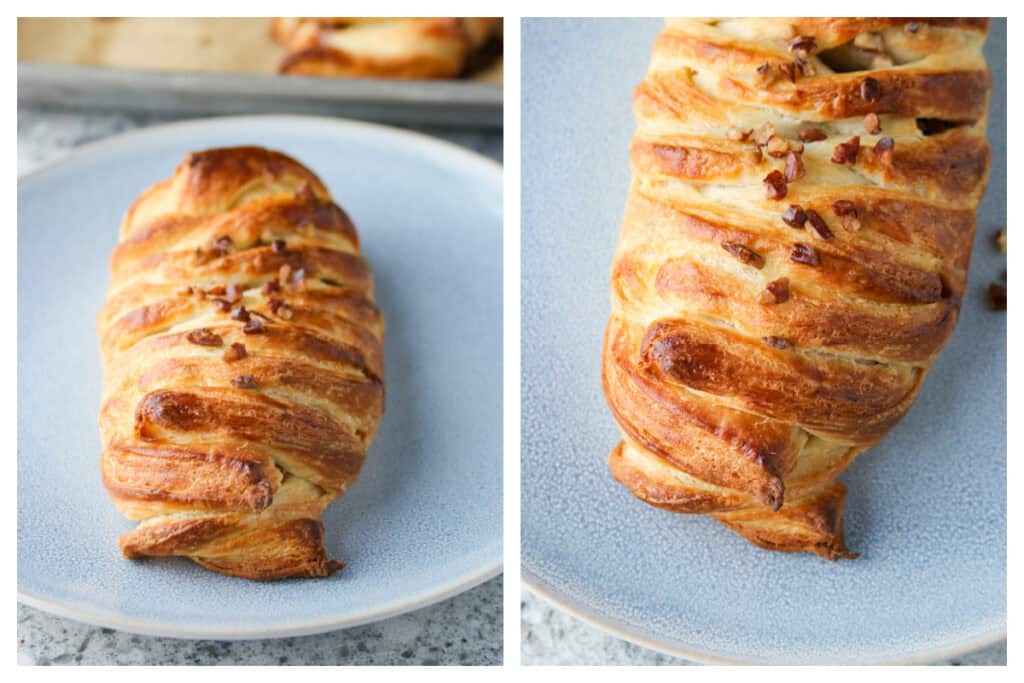
I have been wanting to make this pastry ever since we visited a local pastry shop here in our city a couple of months ago. I love trying out pastries around here, as they keep me inspired to try something new at home.
This Maple Pecan Danish Pastry uses the danish pastry recipe here on the site. If you have made that one already, then you definitely have to try this flavor variation. If you have not tried making Danish pastry yet but want to, then follow along closely as I guide you how to make this pastry for guaranteed success at home.
Danish Pastry vs Croissant
In my opinion, Danish pastry are less laborious than croissants. I love making them both and I think they are delicious in their own ways. Want to try making croissants? Check out How to Make Croissants post.
- Ingredients. Both these pastries are butter rich. The butter in both recipes is responsible for the flaky layers that these pastries are known for. However, the Danish will be slightly richer with the addition of egg, and sweeter because of the variation of fillings like fruits, jams and custard.
- Process. Danish pastries require less time than croissants. Croissants require a more elaborate lamination process (the rolling and folding of dough with the butter enclosed), and more chilling time in the fridge.
- Texture. Croissants have more pronounced layers. The layers are thin, airy, light and when freshly baked, almost crispy. Danish pastry also has those layers, although they are more tender, dense and knit together.
Maple Pecan Danish Pastry Recipe Overview
- The Layered Dough. A buttery dough is mixed the day before making the pastry. After an overnight refrigeration of the dough, it will undergo a series of folding and rolling to make the flaky layers ( I do the lamination after I have made the sweetened pecans).
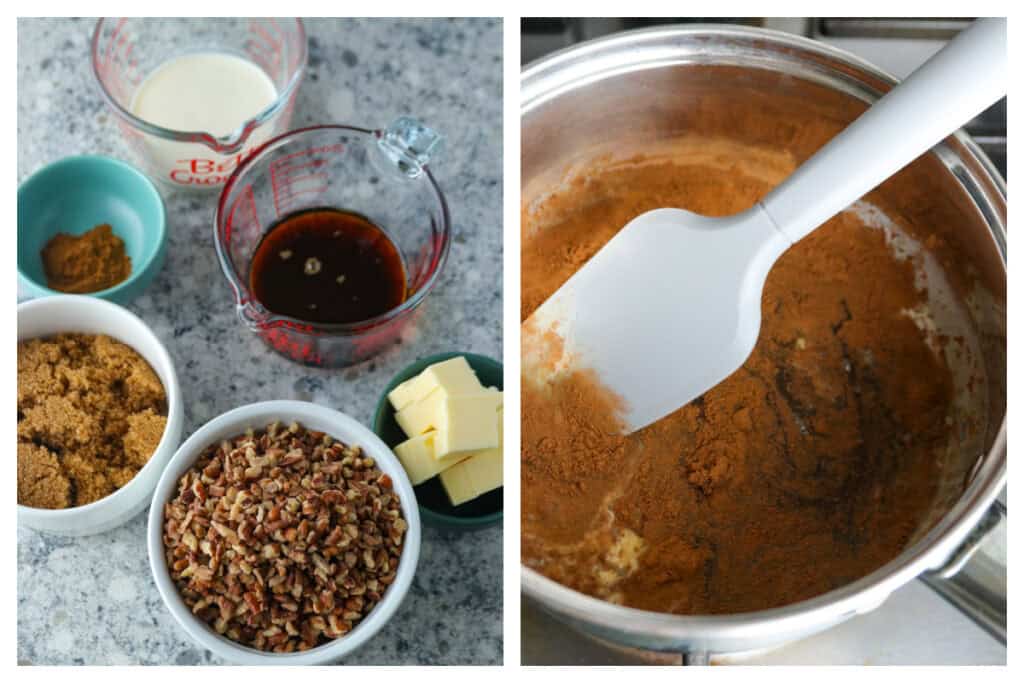
- The Sweetened Pecans. Pecans, maple syrup, brown sugar, whipping cream and butter come together to make the delicious, textured filling for these pastries.
- Braiding Technique. The braiding of the pastry here is similar to the one I used for the Danish pastry braid post, but this one is for smaller portions of the dough.
The Process
Make the Danish Dough
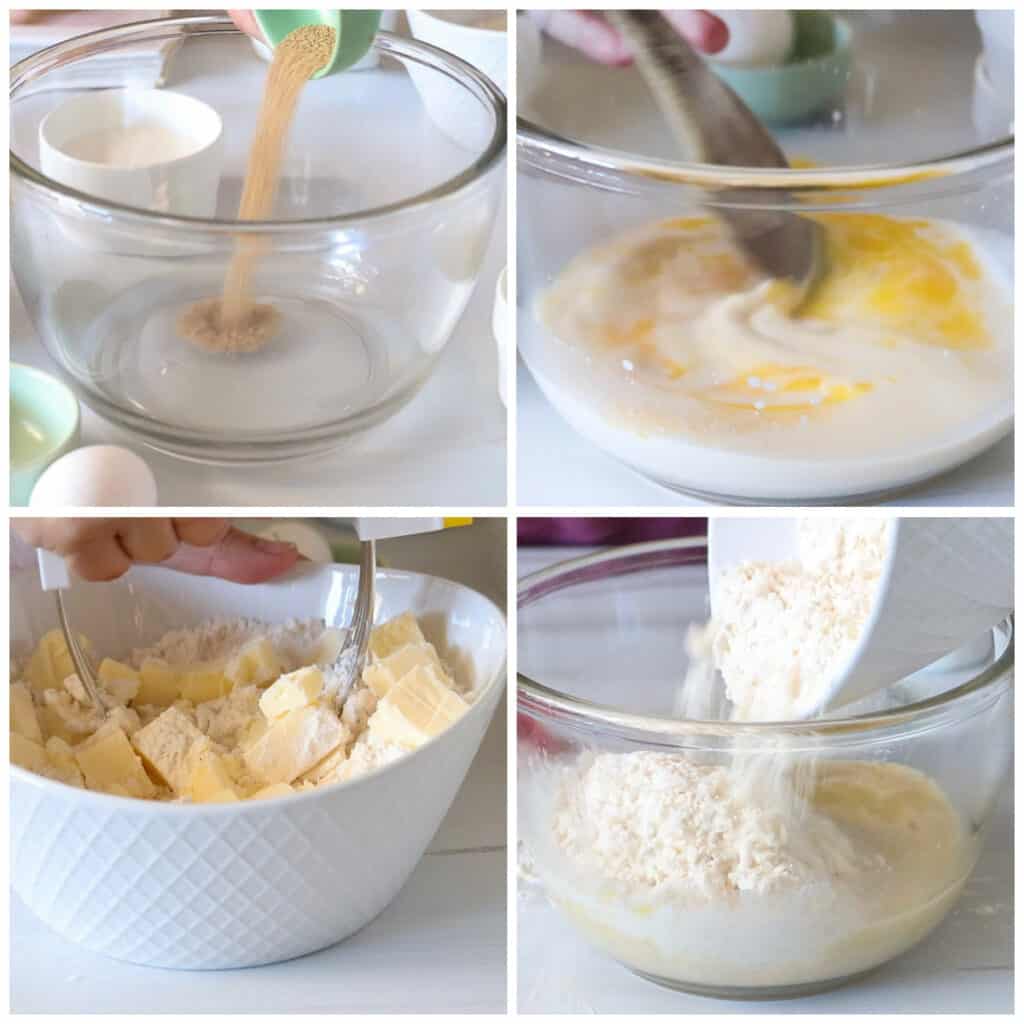
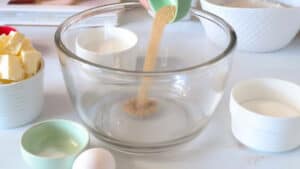
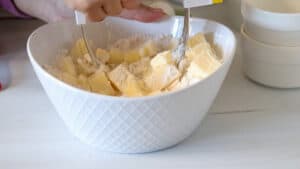
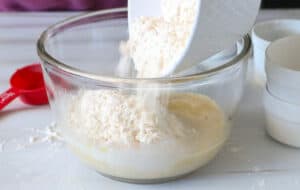
Combine warm water and yeast. Let this sit until a foam forms. Stir in egg, sugar, salt and milk. In a separate mixing bowl, add the flour and the cubed butter. Use a pastry cutter to cut the butter into the flour until coarse meal forms. Add this mixture to the yeast mixture and very roughly combine. Do not overmix. Refrigerate the bowl, covered, overnight.
The Sweetened Pecans
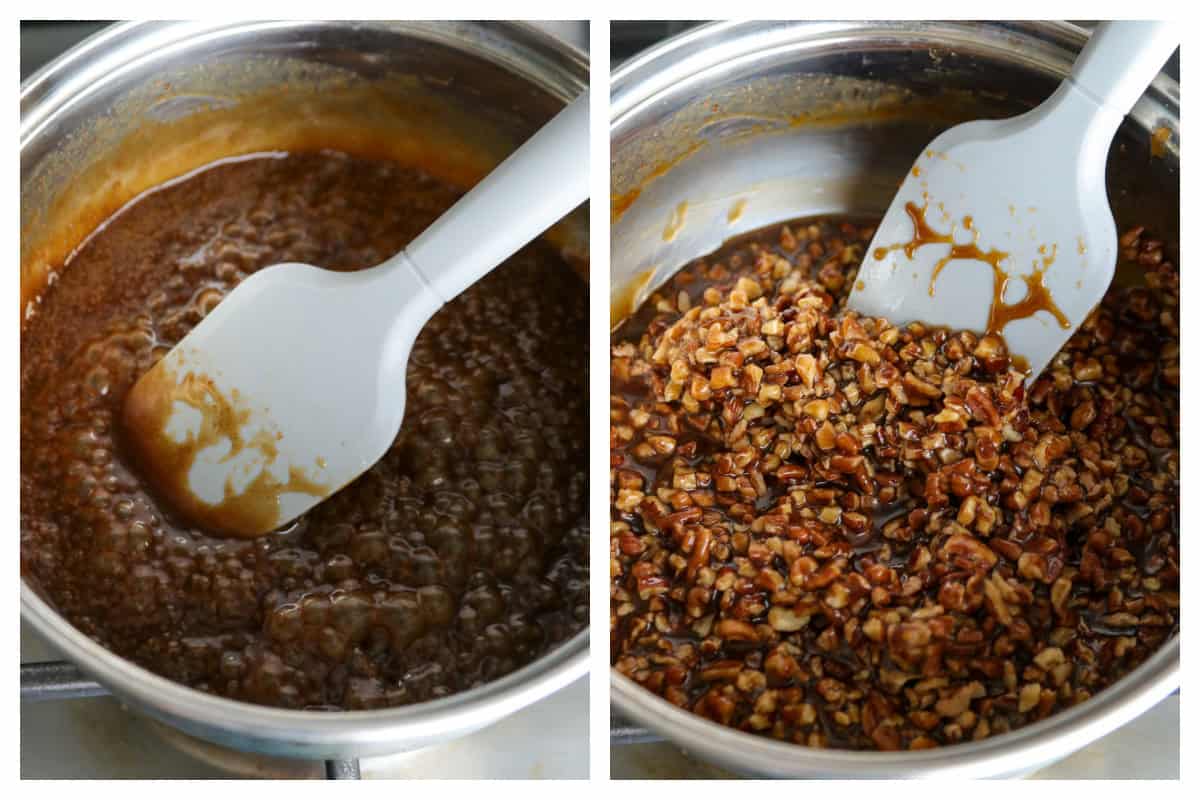
Stir together maple syrup whipping cream, brown sugar and cinnamon in a small saucepan. Turn on heat to medium. Once the ingredients are fully incorporated, add the butter. Bring to a low simmer and keep it for 5 minutes or so, stirring often, until the mixture is thick enough to coat the back of the spoon. Turn off heat add add the pecans, reserving about 2 tablespoons. Allow this to cool completely. This will thicken as it cools.
The Lamination
Take the bowl of dough out from the fridge. Dump the dough on a floured surface (keep a cup of flour by the side to dust the surface and your rolling pin as needed).
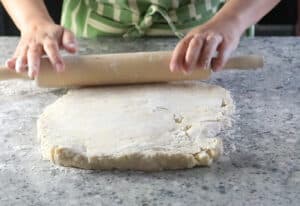
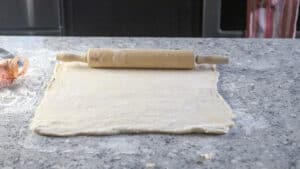
Pat the dough to a rough square, then use a rolling pin to roll it out to a 15 inch square.
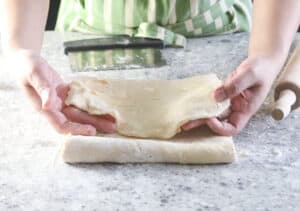
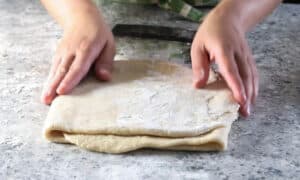
Fold the top third of the square towards the middle, then the lower third over to the center to cover that first fold. Tip: Use a pastry scraper to lift the the dough. This will help a lot with the sticky parts. Rotate the dough so that the short edge is close to you.
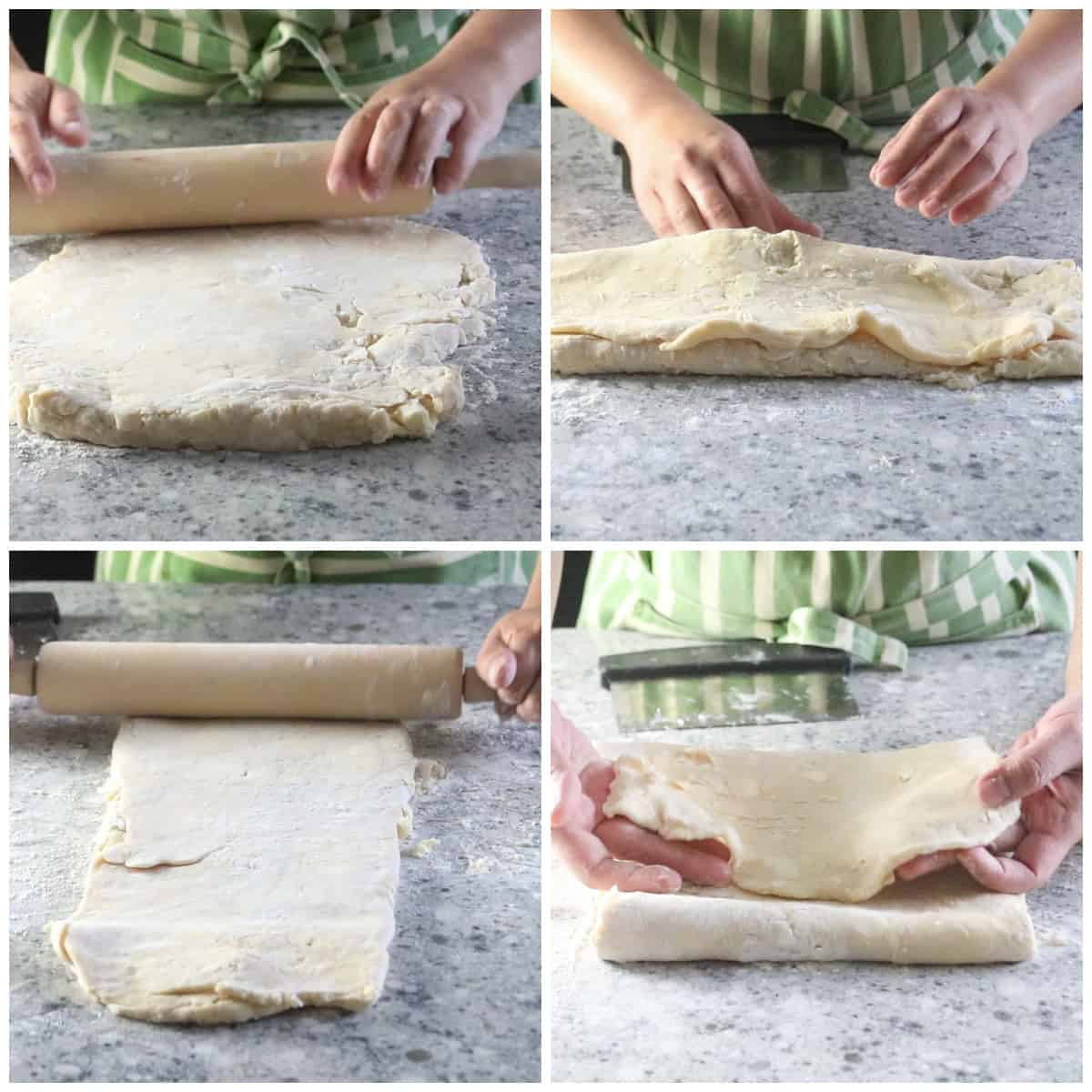
Roll the dough out to 10 x 15 inches rectangle. Then, fold this again in thirds: top part towards the center, then the lower part over it. You will notice that you have made a square-ish shape.
Roll this dough out again to a 15 inch square. Important: If anytime the dough softens and feel warm, chill it in the fridge for about 30 minutes, or in the freezer for 15. Again fold the dough the same way.

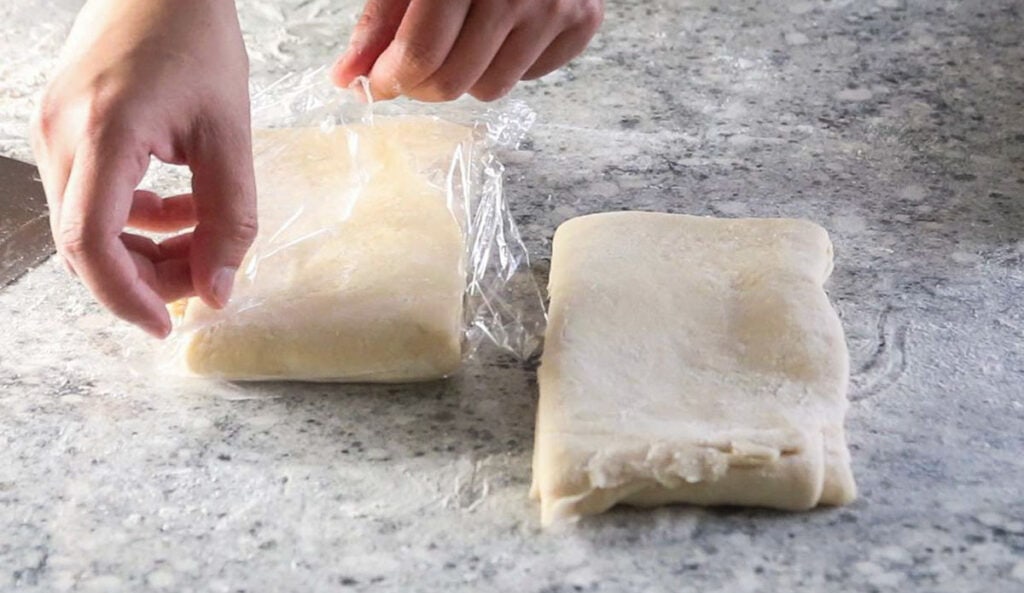
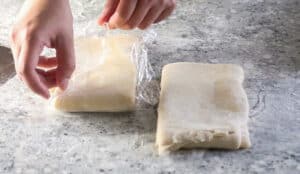
Rotate the dough again so that the short edge is close to you. Roll it out again to a 10x 15 inch rectangle. This time, cut the dough in half. Wrap each portion in plastic and let it rest in the fridge for about 15 minutes if the dough feels warm. If you have refrigerated the dough in between the rolling, you can go ahead with the braiding.
The Braiding
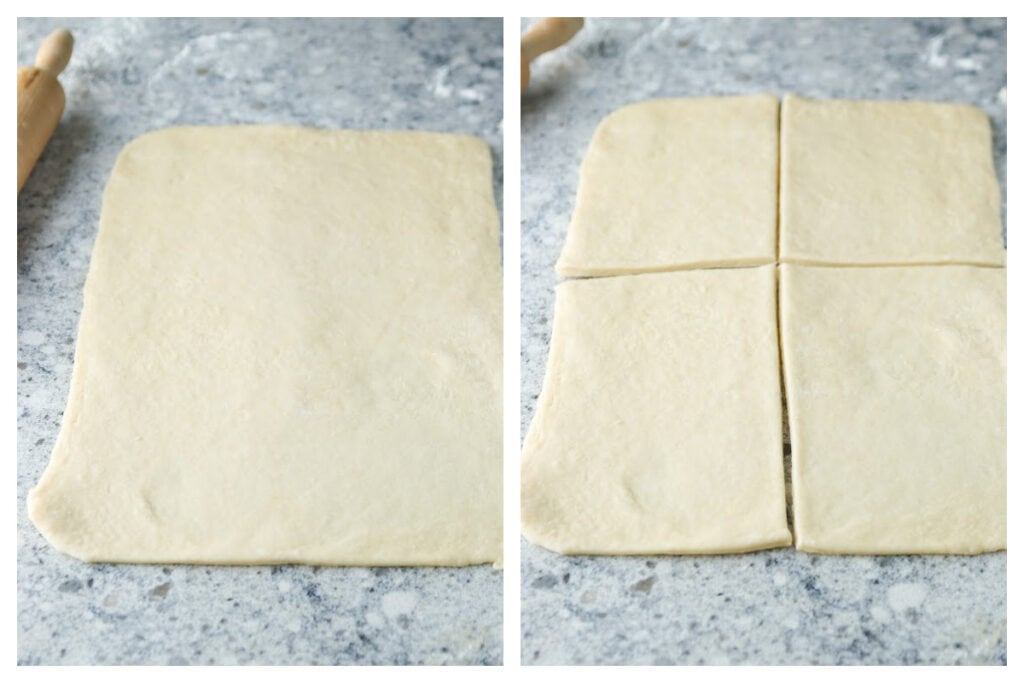
Keeping one portion of the dough in the fridge, start working with the other portion. On a floured kitchen surface, roll the dough out into a 15 x 10 inch rectangle. Cut the dough in half vertically and in half horizontally to make 4 rectangular portions.
Take one rectangle dough and position it in front of you so that the wide edge of the rectangle is facing you. Take about 2-3 tablespoons of the pecan mixture and spread it on the center of the rectangle dough, perpendicular to the long edge, but leaving about a quarter inch of space on the top and bottom.
Using a pizza cutter or sharp knife, cut some downward slanted lines, about a quarter inch long, along both sides of the dough (left and right of the filling).
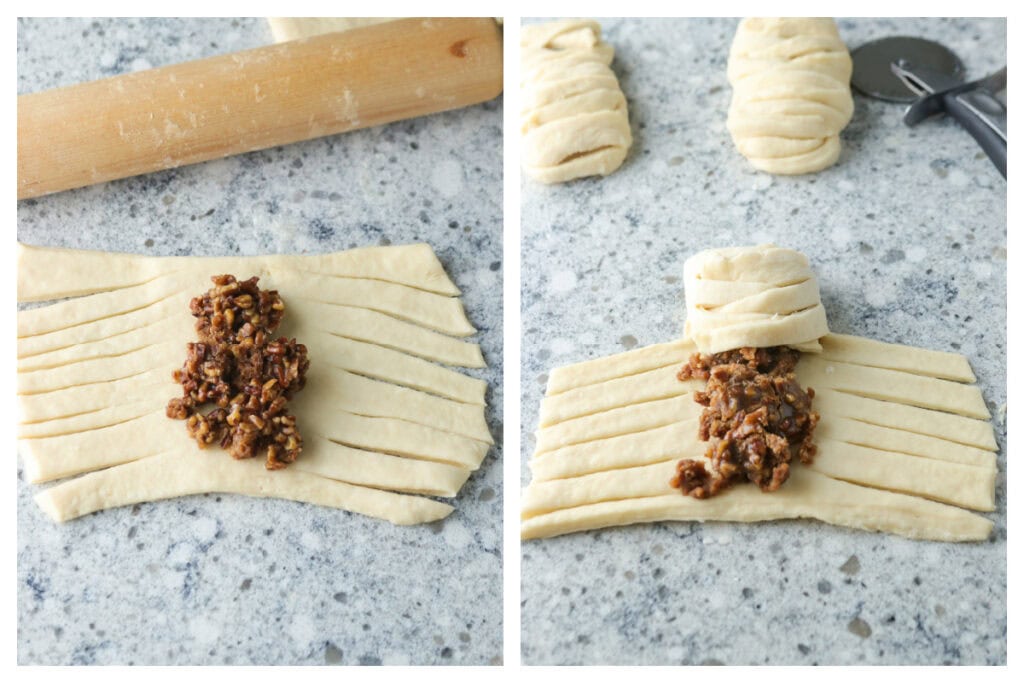
Starting from the top, fold the flap over the filling in the center, then alternately fold another flap from the other side. Continue this alternate folding until the filling is entirely covered and the flaps are all folded. Pinch the end seams to seal. Use a wide spatula to lift the assembled pastry gently to a parchment lined baking sheet. Repeat the process with the remaining portions.
Repeat the same overall process with the remaining half of the pastry dough in the fridge.
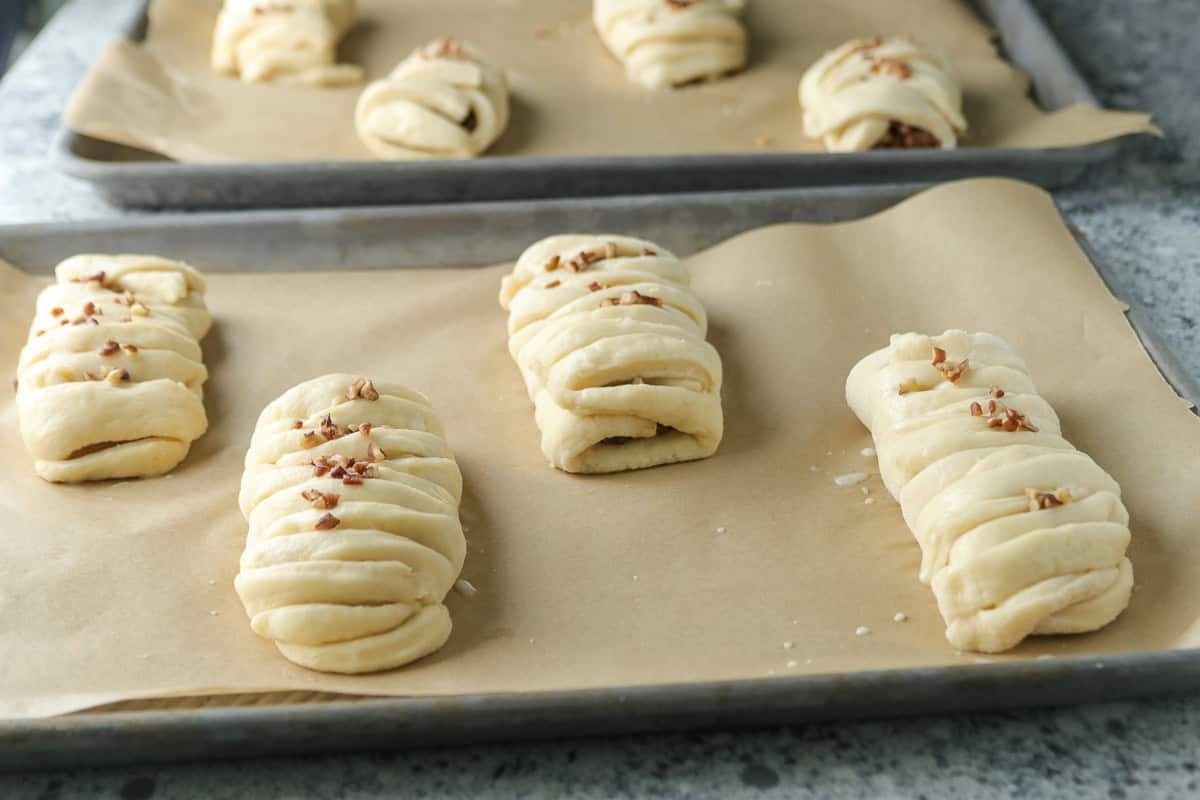
Final Garnish and Baking
Preheat the oven to 350 F. Gently beat together milk and egg in small bowl. Brush the surface of the pastries with the mixture. Sprinkle some chopped pecans on top.
Bake the pastries at 350 F for 13 minutes. Then increase the oven temp to 400 F and bake for 2-5 minutes, watching closely to avoid overbrowning.
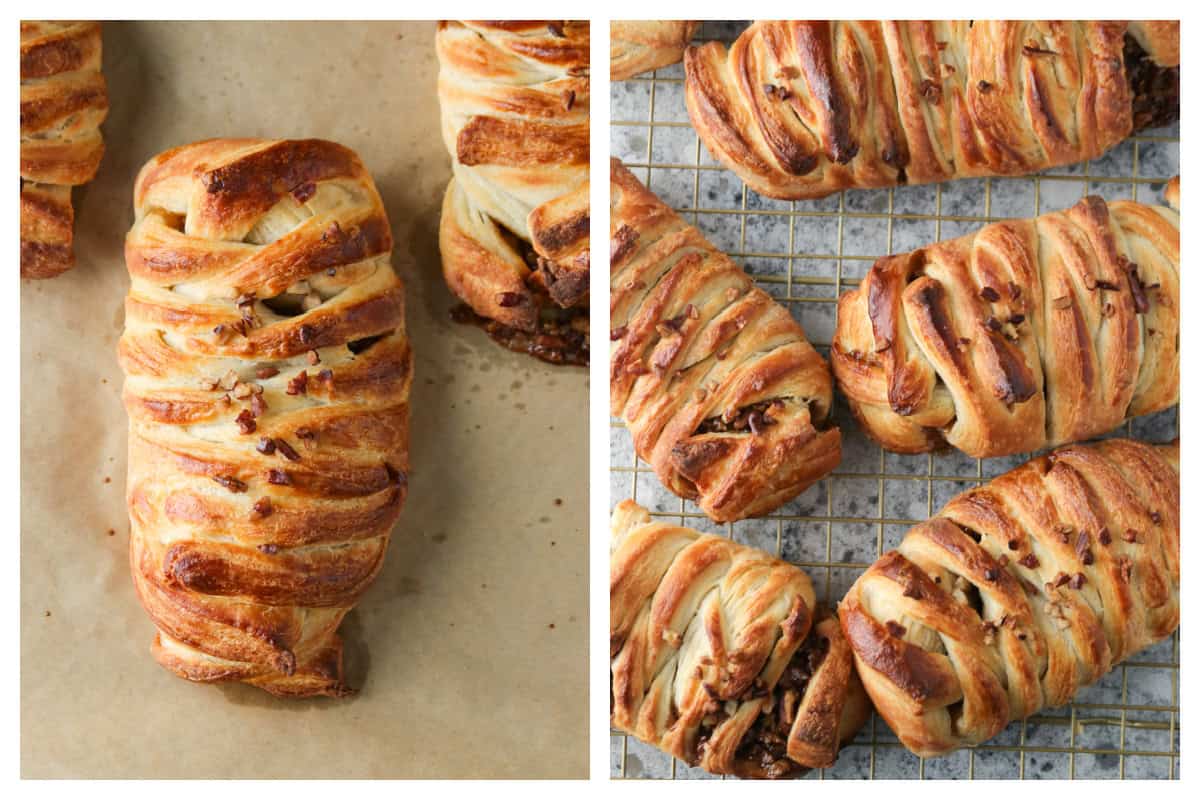
More Pastries
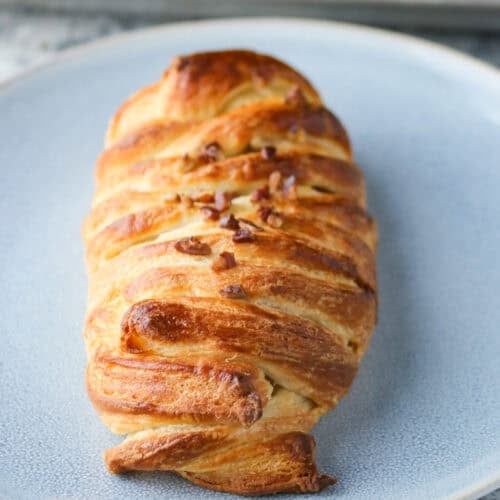
Maple Pecan Danish Pastry
Equipment
- 1 Pastry Cutter/ Pastry Blender
Ingredients
- ¼ cup warm water 105-115 ℉
- 2 ¼ tsp active dry yeast
- ½ cup milk warm
- 1 large egg
- ⅓ cup sugar
- 1 tsp salt
- 2 ¾ cups all-purpose flour
- 8 oz. butter cubed and chilled
For the Filling
- 1 ½ cup chopped pecans softened
- ¼ cup maple syrup
- ¼ cup brown sugar
- ¼ cup whipping cream
- 1 tsp ground cinnamon
- 4 tbsp butter
For the Top
- 1 large egg beaten with 1 tbsp milk (for egg wash)
- 2 tbsp. chopped pecans
Instructions
The Pastry Dough
- Yeast Mixture. Add the warm water to a large mixing bowl. Sprinkle the yeast over it and let the mixture sit for a few minutes until foamy or thick. Add the milk, egg, sugar and salt. Use a wooden spoon to combine.

- The Butter Mixture. In a large bowl add the flour, then the cubed butter. Using a pastry blender, cut the butter into the flour until the mixture looks like coarse crumbs, with bits of butter here and there. It is these bits that will give us the flaky pastry result, so make sure to not overwork here.
- Combine the Two Mixtures and Chill the Mixture Overnight. Pour this crumb mixture into the yeast mixture in the other bowl. Use a wooden spoon to combine, Do not overmix, Again, we want the butter to remain in bits here. Overmixing can yield a tough, non-flaky pastry. Cover the bowl with a plastic wrap and chill it in the fridge overnight.

The Pecan Filling
- Stir together maple syrup, whipping cream, brown sugar and cinnamon in a small saucepan. Turn on heat to medium, and once the ingredients are fully incorporated, add the butter. Bring to a low simmer and keep it for 5 minutes or so, stirring often, until the mixture is thick enough to coat the back of the spoon. Turn off heat add add the pecans, reserving about 2 tablespoons. Allow this to cool completely. This will thicken as it cools.
Lamination (aka roll and fold)
- Pat into a Rough Square. The next day, take out the bowl of dough. Generously dust a clean surface with flour. Turn the dough over and pat into a rough square.

- Roll into a Square and Fold. Using a rolling pin, roll the dough into a 15 inch square. Make sure to dust your surface well to prevent sticking. Fold the dough in thirds to form a rough rectangle. Rotate the dough so that the short edge is closest to you. If needed, use a pastry scraper to lift the edges of the dough if they are sticking.
- Roll into a Rectangle and Fold. Roll the dough out into a rectangle that measures 10 x 22 inches. Again, fold this in thirds. If at anytime the dough starts to warm up and soften, pop it in the fridge or freezer to chill for 5-10 minutes.

- Roll into a Square and Fold, Again. Next, Roll the dough out again into a 15 inch square. Fold this in thirds.
- Roll into a Rectangle, Once More. Roll the dough to 10 x 22 inches rectangle once again, then fold this in thirds.

- Cut the dough in half.. Store one portion in the fridge while you work with the other one.

Assembly
- 10 x 15 Inch Square. On a floured surface, roll the dough into a 10 x 15 inch rectangle. Cut the dough in half vertically and in half horizontally to make 4 rectangular portions.
- Add The Filling. Take one rectangle dough and position it in front of you so that the wide edge of the rectangle is facing you. Take about 2-3 tablespoons of the pecan mixture and spread it on the center of the rectangle dough, perpendicular to the long edge, but leaving about a quarter inch of space on the top and bottom.
- Cut Slanting Lines. Using a pizza cutter or sharp knife, cut some downward slanted lines, about a quarter inch long, along both sides of the dough (left and right of the filling). I am able to do 7-8 lines per side.
- Braid. Fold one strip from both sides alternately towards the center to form a braid. Lift the assembled pastry using a wide spatula then transfer it to a parchment lined baking sheet. Repeat the process with the remaining rectangles. Then the entire process with the remaining half of the dough in the fridge.
Bake
- Preheat the oven to 350 ℉. Brush the tops of the pastry with the egg wash, then sprinkle the reserved chopped pecans on top. Bake the Danish pastries for 13 minutes. Then, increase the oven temperature to 400 ℉ and bake for 2-5 minutes more, or until golden brown.
Notes
- Dough Stickiness. Generously flour your working surface to prevent the dough from sticking.
- Pastry Scraper. A pastry scraper will help you lift the edges of the delicate pastry dough during rolling and folding, so make sure to have one by your side. You can also use a wide metal spatula if you do not have a pastry scraper.
- Do not let the dough warm up. If at anytime the dough warms up and softens too much, pop it in the fridge for 15 minutes or in the freezer for 5-8 minutes.
- Leftovers. Store leftover pastry at room temperature for up to 2 days, covered well in a container. Refrigerate the pastry to store it for up to a week.
- Freezing the Danish Pastry Dough. You can freeze the Danish pastry for up to a month. Wrap it well in plastic film, then in foil.






My daughter’s favorite pastry!